Mars analogues on Earth are an important thing to our understanding if we wish to explore and colonise Mars in future. In this recorded lecture presented to the National Space Society of Australia, MSA Presidence Dr Jonathan Clarke explains recent team expeditions to MDRS, FMARS, Ladakh and New Zealand.
Welcome to Mars Society Australia
Countdown to Crews 291 & 292
Friday, 5 January 2024
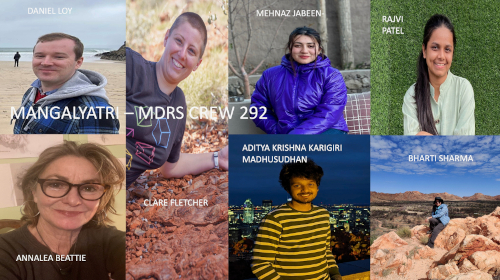
Countdown has begun for the two Mars Society Australia led expeditions to the Mars Desert Research Station later this month. The first crew rotation (291) will be an all Australian crew, on site from 20th January to 3rd February. Rotation 292 'Mangalyatri' will comprise a predominantly Indian crew under the leadership of Dr Annalea Beattie, from 4th February to 17th February. The rotations will be undertaken in full simulation mode. Research streams include geology, engineering, human factors/medical science, microbiology and astronomy. There will be a program of daily EVA's to undertake fieldwork.
Read more about the expeditions and crew here.
MSA Annual General Meeting - 29th October, 2023
Sunday, 1 October 2023
The 2023 Annual General Meeting for the Mars Society Australia will be held at 5pm on Sunday October 29th.
Zoom Meeting ID 8959761238
The meeting password, President's report, Financial report, and agenda will be forwarded to members prior to the meeting.
2023 MSA PLANETARY ANALOGUES FIELD TRIP
Monday, 11 September 2023
2023 MSA PLANETARY ANALOGUES FIELD TRIP
Jonathan Clarke
Between July 24th and August 7th 10 people visited a diversity of Mars and planetary analogue sites in Victoria, South Australia, and the Northern Territory on a field trip organised and led by Mars Society Australia. The expedition covered 8200 km in total, over 14 days. The party consisted of four geologists, three artists, an IT expert, nurse, and an anthropologist. Seven were from Australia, two from the US, and one from India. Four were MSA members, including two directors.
Below are some photographic highlights.
All photos by the author and members of the expedition.
Day 3
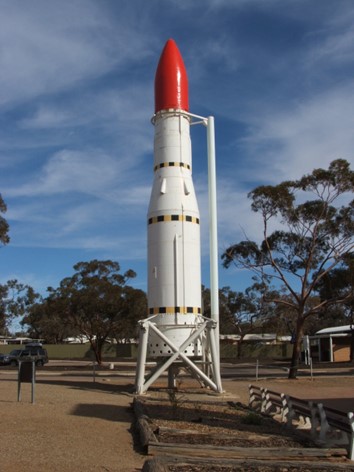
Figure 1. Woomera rocket and missile park. The Black Arrow rocket, the type that launched the UK’s first satellite, is...
Mars Society Australia and the FMARS-15 crew on Devon Island, Canada
Thursday, 20 July 2023
The Mars Society is running an upgrade and science mission FMARS station, located on Devon Island, in the far northern region of Canada. This is in one of the most Mars-like environments on Earth, just 900 miles from the North Pole.
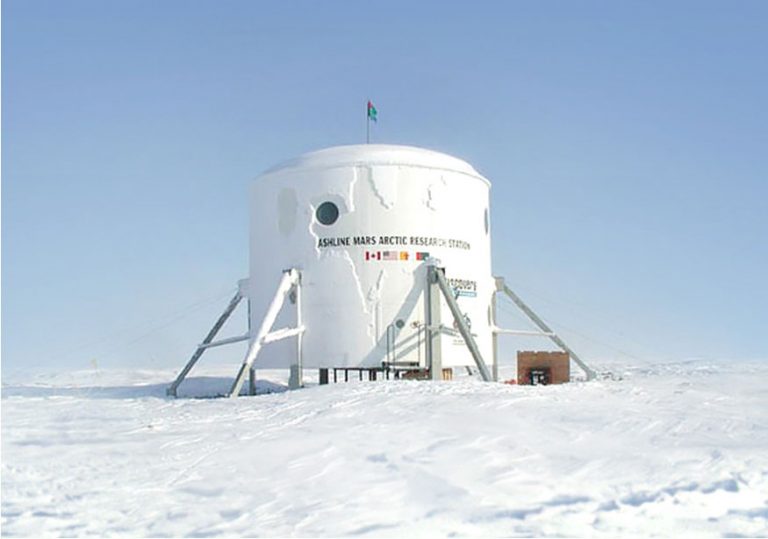
You can read more about the mission via this link:
All MSA news items...
Help the MSA!
This week @ NASA

User login
Shopping cart
Your shopping cart is empty.
Mars Missions


MSA In The News
9 November 2019
ABC News
6 November 2018
International Journal of Remote Sensing
26 July 2018
Sydney Morning Herald